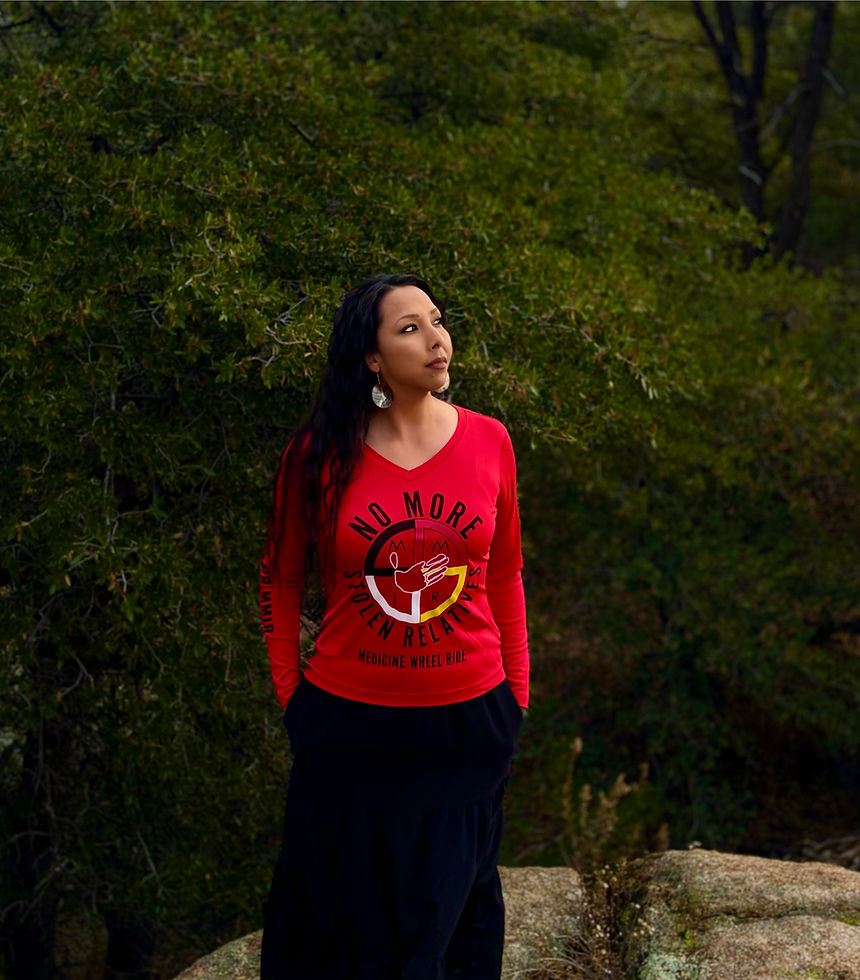
In September, a member of our circle typed something into our Zoom chat that I have not been able to put down. In the child welfare cases she sees, she wrote, some parents are overwhelmed by the system. Early in a case, before there has been time to build relationship or trust, they leave, and they can be gone for months at a time. Her question, in my words: what do we do when a family leaves before we have earned the right to be trusted?
That question is our whole October circle.
Why trust is not a given
A Native family that has been watched learns to read a helper as a risk. That is not paranoia. It is memory. Before Congress passed the Indian Child Welfare Act in 1978, Native children were being removed from their families at rates of 25 to 35 percent, and most of them were placed outside their families. Many of the grandparents of the families we serve were sent to boarding schools. So when a stranger with a clipboard knocks in the first week of a case, a family's body answers before anyone speaks.
What the first thirty days decide
In those first weeks, a family is quietly asking three questions. Will you tell me the truth? Will you come back when you said you would? Are you here to help me keep my children, or to take them? Every kept promise answers one of those questions. Every missed call answers it too.
Relationship is a protective factor
In the science of adverse childhood experiences, relationship is medicine. A 2019 Johns Hopkins study found that adults who had six or seven positive childhood experiences had 72 percent lower odds of depression or poor mental health than adults who had two or fewer. Those experiences include feeling safe and protected by an adult at home, having at least two adults besides their parents who took a genuine interest in them, and enjoying the traditions of their community. Our grandmothers did not need the study. It is good that it exists.
What we will do on Wednesday
Ten minutes of teaching, and then the circle does the work: small rooms of three or four, one question, and a harvest of what each room knows. Three people who live this work every day will share what is working where they are. The chat counts as much as unmuting.
Wednesday, October 7 · 1:00–2:15 PM Arizona · Zoom · Free
Who this circle is for
The Rural & Indigenous Community Committee is a circle of the Arizona ACEs Consortium. We meet the first Wednesday of every month. The circle is for tribal programs, schools and educators, health and behavioral health, courts and first responders, Head Start and early childhood, and community members and relatives. No membership fee. No credentials required.
To join, email me at casandrastouder@gmail.com and I will send you the link. Bring someone who should be in the room.
What is the one thing that makes a family decide to stay in relationship with you?
Ahéhee', Cas
Casandra (Cas) Stouder · Diné & Seminole · Indigenous Wellness Consultant Chair, Rural & Indigenous Community Committee · Arizona ACEs Consortium
Sources: National Indian Child Welfare Association, “What is ICWA?”; Bethell C, et al., “Positive Childhood Experiences and Adult Mental and Relational Health in a Statewide Sample: Associations Across Adverse Childhood Experiences Levels,” JAMA Pediatrics, 2019.